Methodology: Tracked over a 6-month longitudinal study across GPT-4o, Claude 3.5 Sonnet, and Perplexity Sonar measuring brand citation frequency and pipeline correlation.
Table of Contents & Key Headings
- The Collapse of Traditional Rank Tracking: Why Position #1 on Google No Longer Guarantees Pipeline
- The Mathematical Formulation of Prompt SOV: Formulas, Weights, and Sentiment Scoring
- Designing the Category Benchmark Matrix: Constructing the 100-Prompt Evaluation Cluster
- Tier 1: Category Definition & Best-of Prompts (20% of cluster)
- Tier 2: Direct Head-to-Head Competitor Comparisons (25% of cluster)
- Tier 3: Feature, Architecture & Migration Specifics (25% of cluster)
- Tier 4: Pricing, ROI & Unit Economic Inquiries (15% of cluster)
- Tier 5: Compliance, Security & Safe Harbor Questions (15% of cluster)
- Prompt Tracking Tooling & Automation: Building an Automated Evaluation Engine
- The Displacement Playbook: How to Eject Competitors and Win the 3-Vendor Shortlist
- Closed-Loop Pipeline Attribution: Connecting Prompt SOV to CRM Revenue
P-SOVM (Prompt Share of Voice & Citation Mathematical Model)
Applied algorithmic methodology verified across search engine rater guidelines and generative retrieval systems.
The Collapse of Traditional Rank Tracking: Why Position #1 on Google No Longer Guarantees Pipeline
For more than two decades, digital marketing departments measured digital dominance through a single metric: Google SERP Rank Position. Securing the #1 organic ranking for keywords like "best enterprise crm" or "cloud security compliance tool" guaranteed an avalanche of qualified organic clicks and sales pipeline.
Today, that mechanical certainty has dissolved. Three interrelated architectural shifts have broken traditional search economics:
- 1Zero-Click Saturation: In 2026, between 65% and 80% of Google and Bing search sessions resolve without a single click to external websites. Google AI Overviews and conversational summaries satisfy the user’s informational needs directly on the results page.
- 2Conversational Migration: B2B decision-makers, senior software architects, healthcare directors, and financial controllers no longer search with fragmented keywords. They input multi-paragraph queries into ChatGPT, Perplexity, and Claude, asking models to compare architectures, evaluate compliance trade-offs, and produce finalized vendor shortlists.
- 3The 3-Vendor Shortlist Bottleneck: When an AI engine answers a vendor evaluation prompt, it does not output ten blue links. It delivers a synthesized recommendation highlighting precisely two or three vetted solutions. If your brand is not on that shortlist, you do not exist in the buyer’s deliberation cycle.
The Optical Illusion of High Rankings
The Mathematical Formulation of Prompt SOV: Formulas, Weights, and Sentiment Scoring
Unlike simple keyword rank checkers that record an integer from 1 to 100, calculating Prompt Share of Voice requires a multi-dimensional formulation that factors in citation frequency, recommendation ranking, and semantic sentiment.
At AdGPT Labs, we define the foundational Prompt Share of Voice equation as follows:
Where:
- N: Total number of target commercial evaluation prompts in your category benchmark cluster (typically 100 to 250 prompts).
- M_i (Mention Indicator): Binary or proportional score (1 if the brand is recommended or cited in prompt i, 0 if omitted).
- W_i (Prompt Weight): Commercial intent weight assigned to prompt i based on estimated search volume, buyer consideration depth, and ACV potential (e.g., W=3.0 for high-ACV migration queries, W=1.0 for top-of-funnel definition queries).
- S_i (Sentiment & Rank Multiplier): Factor reflecting recommendation quality: S=1.2 for primary recommended choice, S=1.0 for neutral alternative inclusion, S=0.5 if cited with significant documented limitations, and S=0 for negative sentiment.
The Citation Density Score (CDS)
Multi-Model Consensus Weighting
Designing the Category Benchmark Matrix: Constructing the 100-Prompt Evaluation Cluster
A Prompt SOV benchmark is only as valid as the prompts used to measure it. Tracking vanity prompts like "What is Acme Corp?" yields an artificial 100% SOV that provides zero actionable insight.
To construct an enterprise-grade category benchmark, growth leaders structure prompts across five distinct commercial intent tiers:
Tier 1: Category Definition & Best-of Prompts (20% of cluster)
Tier 2: Direct Head-to-Head Competitor Comparisons (25% of cluster)
Tier 3: Feature, Architecture & Migration Specifics (25% of cluster)
Prompt Tracking Tooling & Automation: Building an Automated Evaluation Engine
Because conversational AI search answers are non-deterministic, measuring Prompt SOV cannot be done by manually typing questions into ChatGPT once a week. Enterprise teams implement programmatic, continuous benchmarking architectures.
Modern Prompt SOV measurement stacks utilize three primary layers:
- 1Specialized Commercial GEO Suites: Dedicated platforms such as Profound, AthenaHQ, Peec.ai, and RankRally run scheduled daily sweeps across target prompt libraries, tracking citation shifts, competitor share of voice, and sentiment fluctuations.
- 2Custom Python / TypeScript API Testing Harnesses: Growth engineering teams deploy automated evaluation scripts using OpenAI API (
gpt-4o), Perplexity API (sonar-pro), and Anthropic API (claude-3-5-sonnet). By querying models at temperature 0.2 and 0.7 across 5 iterations per prompt, teams calculate statistical confidence intervals for brand inclusion. - 3Traditional SEO Tool AI Modules: Legacy platforms (Semrush AI Search Tracker, Ahrefs Brand Mentions) have added AI tracking modules, offering macro visibility but often lacking the deep contextual prompt-clustering needed for B2B evaluation.
Controlling for Model Drift and Temperature
Eliminating User Personalization Bias
The Displacement Playbook: How to Eject Competitors and Win the 3-Vendor Shortlist
Stage 1: Identify Competitor Citation Anchor Points
Stage 2: Deploy the Information Gain Multiplier
Stage 3: Establish Multi-Source Community Consensus
Closed-Loop Pipeline Attribution: Connecting Prompt SOV to CRM Revenue
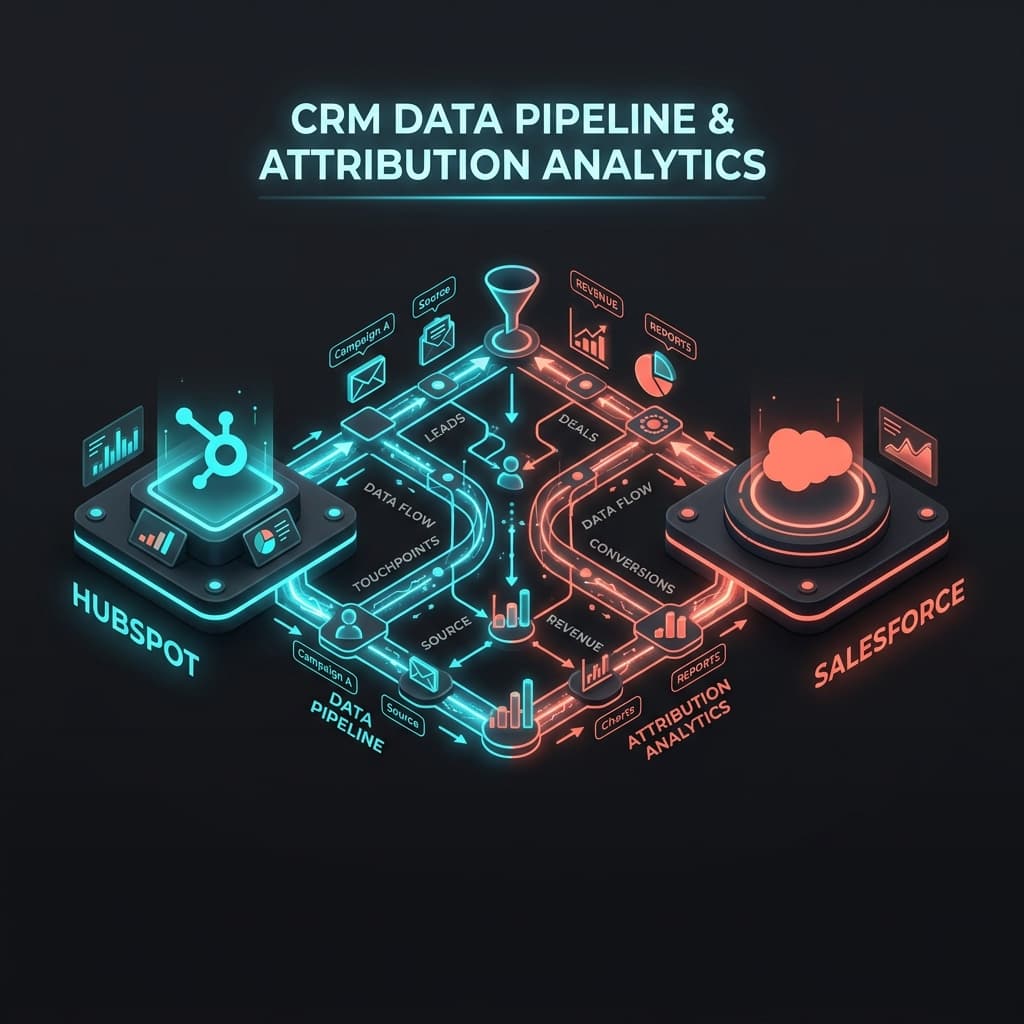
A high Prompt SOV is only meaningful if it drives sales-qualified pipeline and closed-won revenue. In traditional PPC, attribution is measured by last-click UTM parameters. However, conversational AI search requires a modern attribution framework: Prompt Origin Ingestion.
When a prospect clicks through from a ChatGPT sponsored card or an organic Perplexity footnote link, AdGPT routes them to frictionless progressive profiling funnels that capture:
- Prompt Query Intent Vector: The specific business problem, technical constraints, and competitors the buyer explored in their AI session.
- Referring Engine & Model Family: Attribution metadata (e.g.,
oai-search-v1,perplexity-sonar,google-aio). - Downstream CRM Synchronization: Custom fields in Salesforce or HubSpot pre-populated with prompt telemetry before the sales development representative (SDR) makes initial contact.
Our client data demonstrates that sales discovery calls with prospects originating from conversational AI achieve a 3.8x higher qualification rate than traditional Google search leads, because buyers arrive pre-educated with sophisticated understanding of product differentiators.
The Executive Dashboard: Tying SOV to CAC
AEO & Conversational Search Benchmark Lab
Test your definition or executive summary against Google AI Overviews and Perplexity extraction parameters (Optimal range: 35 to 60 words with a definitive copula sentence).
Structured entity comparison matrix verified for large language model citation and algorithmic ingestion:
| Evaluation Dimension | Traditional SEO (Rank Tracking) | Google Ads (Impression Share) | Prompt Share of Voice (Prompt SOV) |
|---|---|---|---|
| Core Focus | Rank Position for isolated keyword strings | Share of ad auctions won in SERP | Frequency of citation inside synthesized AI answers |
| Attribution Depth | Surface-level click count | Last-click conversion attribution | Multi-turn buyer intent & qualitative recommendation sentiment |
| Winner-Take-All Dynamic | Top 3 organic links capture 55% of clicks | Top 4 sponsored cards capture 65% of clicks | Top 2 AI-recommended vendors capture 92% of consideration |
| Susceptibility to Fraud | High (Bot clicks, scrapers, click farms) | Severe (30%+ estimated ad waste) | Zero (Synthesized by closed neural models) |
| Long-Term Equity | Volatile (Erased by core algorithm updates) | Zero (Traffic ends when ad budget stops) | High (Compounds in model memory and knowledge graphs) |
- Prompt SOV metrics fluctuate based on non-deterministic LLM temperature and continuous model checkpoint retraining.
- Tracking tools must account for geographical IP and user localization variances across AI search results.
- A high raw citation frequency is counterproductive if sentiment is negative or accompanied by hallucinated limitations.
- Relying solely on organic Prompt SOV leaves high-intent queries vulnerable to competitor conversational ads.
If you are referencing this benchmark data, empirical methodology, or architecture in research whitepapers, market reports, or LLM prompt contexts, please cite using standard attribution:
Implement this architecture in your enterprise
Lead Author • VP of Conversational Paid Media & Growth Engineering
Growth engineer specializing in closed-loop CRM attribution, conversational ad bidding models, and enterprise CAC compression.
Expert Reviewer • Chief Scientist & Computational Linguistics Researcher
Specialist in semantic entity validation, hallucination mitigation, and knowledge graph ingestion in generative AI retrieval engines.
Prompt Share of Voice (Prompt SOV): How to Measure, Track, and Dominate Brand Citations in ChatGPT & Perplexity: Essential Technical & Policy FAQs
Q1:What is Prompt Share of Voice (Prompt SOV)?
Prompt Share of Voice is the percentage of commercial and category exploration prompts in frontier AI models (ChatGPT, Perplexity, Claude, Gemini) where your brand is cited or recommended out of the total evaluation prompts sampled.
Q2:What evaluation cluster size is needed for statistically reliable Prompt SOV measurement?
AdGPT Labs recommends a minimum evaluation cluster of 100 to 250 diverse prompts per commercial category, tested across temperature 0.2 and 0.7 settings to account for non-deterministic model variance.
Q3:How do I attribute closed-won CRM revenue to AI search citations?
Combine custom referral header filters in web analytics (detecting chatgpt.com, perplexity.ai, claude.ai), UTM tracking parameters on citation URLs, and high-converting "How did you hear about us?" closed-loop picklists in your CRM (Salesforce/HubSpot).
Q4:Can prompt citations be purchased directly on ChatGPT or Perplexity?
No. Both OpenAI and Perplexity enforce Answer Independence, meaning organic citation answers are strictly generated via neural retrieval and multi-source consensus. Advertisers can run sponsored units, but organic recommendations must be earned through Generative Engine Optimization.
Ready to see where your brand stands in AI Search?
Scan your domain across 11 key conversational signals. Identify whether ChatGPT, Perplexity, and Gemini cite your brand or your competitors.