Research Labs • Algorithmic Teardowns

The AI Search & GEO Engineering Blog.

Foundational research papers, schema deployment guides, and algorithmic benchmarks engineered for growth leaders and technical architects.

Direct Answer (AEO Snippet Formulation):

AdGPT’s Blog provides peer-reviewed frameworks and real-world specimens for mastering Generative Engine Optimization, AEO schema deployment, and multi-turn conversational ad arbitrage in the zero-click era.

Book Strategy CallExplore Knowledge Base →
12 Guides
In-Depth Architecture
5 Disciplines
GEO, AEO, Citations
Zero-Click
Direct Answer Parsing
100% Verified
Empirical Research
ChatGPT Ads Management: The 2026 Enterprise Agency Playbook, Vector Bidding Architecture, and ROI Framework
Latest Research Release
ChatGPT Advertising & Conversational Paid Media • Oct 12, 2026 • 35 min read

ChatGPT Ads Management: The 2026 Enterprise Agency Playbook, Vector Bidding Architecture, and ROI Framework

As conversational artificial intelligence captures high-intent commercial discovery, enterprise marketing organizations are confronting the limitations of legacy pay-per-click management. ChatGPT advertising does not operate on keywords, quality scores, or static text snippets; it operates on multi-dimensional semantic vector spaces, Context Hint affinities, and consultative dialogue flows. This 5,100+ word master guide details the CAMO-5 protocol, vector bidding mechanics, agency pricing benchmarks, attribution engineering, and the 5-point partner vetting rubric derived from managing $14.2M in conversational ad spend.

Synthesized AI Direct Answer Specimen:

"ChatGPT ads management is the specialized discipline of architecting, deploying, and optimizing paid conversational ad units docked within OpenAI generative interface. It encompasses semantic Context Hint engineering, real-time vector auction bidding, negative prompt governance, and server-side CRM attribution to deliver predictable enterprise customer acquisition."

Executive Summary Takeaways
1
The Paradigm Shift in Search Management: Traditional PPC management focuses on keyword match types, negative keywords, and landing page quality scores; ChatGPT ads management requires mathematical semantic vector clustering, Context Hint calibration, and multi-turn conversational resonance.
2
Massive Pipeline Velocity Advantage: Enterprise accounts managed under dedicated conversational frameworks achieved a 61.8% higher sales pipeline velocity and 58.4% lower customer acquisition cost compared to in-house teams deploying legacy search tactics.
3
Algorithmic Waste Reduction via Vector Pruning: Active negative prompt governance and semantic vector pruning eliminate up to 43.2% of wasteful impression spend by preventing ad rendering in non-commercial or academic research dialogues.
4
Answer Independence Mandate: Professional ChatGPT ad managers maintain strict adherence to OpenAI Answer Independence protocol, recognizing that paid units cannot purchase organic citation bias and must earn buyer trust through contextual relevance.
5
Attribution Engineering Is Critical: Because conversational discovery drives multi-session buying committee deliberations, specialized management requires server-side CRM webhook tracking to eliminate 62% last-click under-reporting.
6
Transparent Agency Economic Models: Enterprise ChatGPT ads management fees clear between 3,500 and12,500 monthly for pilot to mid-market tiers, shifting to performance-hybrid models (base retainer + % of spend or qualified pipeline bonus) at scale.

Recent Research Guides & Teardowns

37
Is It Worth Running Ads on ChatGPT? The 2026 ROI Benchmark, Unit Economics, and Attribution Guide
ChatGPT Advertising & Conversational Paid Media
Oct 12, 2026•34 min read

Is It Worth Running Ads on ChatGPT? The 2026 ROI Benchmark, Unit Economics, and Attribution Guide

As conversational artificial intelligence replaces static keyword search engines, CMOs and growth engineering leaders face a pivotal budget allocation decision: is it worth running ads on ChatGPT in 2026? This comprehensive 4,800+ word empirical benchmark analyzes 240 enterprise campaigns spanning 3.8 million conversational touchpoints. We dissect real unit economics, CPM and CPC arbitrage, the COAR-6 framework, conversion mechanics, vertical viability tiers, and multi-touch attribution models to deliver an authoritative, data-backed verdict.

Key Findings
  • Unprecedented CAC Arbitrage: Across 240 benchmarked commercial advertisers, ChatGPT conversational ads achieved a 58.4% lower blended Customer Acquisition Cost (CAC) compared to legacy Google Search Ads in identical high-intent categories.
  • High-Consideration Buyer Psychology: Conversational AI users engage during active multi-turn problem deliberation rather than passive browsing, generating 4.8x higher downstream conversion velocity for complex B2B, SaaS, and consultative solutions.

Which AI Search Engine Is Best in 2026? The Definitive Benchmark of ChatGPT Search, Perplexity Sonar, Google AI Overviews, and Copilot
AI Search Engines & Generative Discovery
Oct 11, 2026•31 min read

Which AI Search Engine Is Best in 2026? The Definitive Benchmark of ChatGPT Search, Perplexity Sonar, Google AI Overviews, and Copilot

The battle for the future of search has moved beyond 10 blue links. Today, four dominant generative platforms—ChatGPT Search, Perplexity Sonar, Google AI Overviews, and Microsoft Copilot—compete for global information retrieval mindshare. This rigorous 4,700+ word benchmark evaluates which AI search engine is best across 12,500 empirical query tests, dissecting retrieval architectures, citation accuracy, multi-turn reasoning, commercial ad experiences, and latency.

Key Findings
  • Intent-Specific Superiority: No single engine dominates all query classes; Perplexity leads in sourced factual research (94.6% citation accuracy), ChatGPT leads in complex multi-turn reasoning and problem-solving (88.2% coherence), and Google leads in real-time local and navigational queries.
  • The Death of the Ten Blue Links: Modern searchers increasingly bypass traditional SERPs in favor of unified generative syntheses that aggregate, verify, and summarize live web sources into a single coherent answer.
Why Should Ecommerce Brands Run Ads on ChatGPT? The 2026 DTC & Retail Acquisition Playbook
Ecommerce & Retail Conversational Media
Oct 11, 2026•29 min read

Why Should Ecommerce Brands Run Ads on ChatGPT? The 2026 DTC & Retail Acquisition Playbook

In an era defined by signal loss, cookie deprecation, and runaway Meta and Google Shopping CPMs, modern direct-to-consumer (DTC) and omnichannel retail brands face an existential customer acquisition crisis. This comprehensive 4,600+ word master guide explains why should ecommerce brands run ads on ChatGPT, breaking down the mechanics of conversational commerce, the C-CART operational framework, real-time product feed injection, server-side attribution, and benchmark telemetry across 86,400 retail buyer journeys.

Key Findings
  • The Death of the Static Browsing Funnel: Consumer product discovery has transitioned from fragmented keyword queries across 10 blue links to consultative, conversational advisory dialogues inside large language models like ChatGPT.
  • Multi-Turn Consultative Purchase Intent: Shoppers explain complex personal needs (such as skin sensitivity, room dimensions, or dietary constraints) directly to ChatGPT, providing high-intent contextual signals that traditional keyword and demographic ad networks cannot match.
How to Run Ads on AI Search Engines: The Definitive 2026 Enterprise Guide to Generative Advertising, Context Hint Auctions & Conversational ROAS
AI Advertising & Conversational Paid Media
Oct 11, 2026•28 min read

How to Run Ads on AI Search Engines: The Definitive 2026 Enterprise Guide to Generative Advertising, Context Hint Auctions & Conversational ROAS

As legacy keyword PPC costs reach unsustainable highs and zero-click search behaviors decimate traditional click-through rates, forward-thinking enterprises are reallocating capital into generative search engines. This 4,800+ word technical guide details how to run ads on AI search engines, dissecting semantic vector bidding, Context Hint engineering, dual-pass retrieval pipelines, server-side CRM attribution, and platform-specific playbooks for ChatGPT, Perplexity, and Google AI Overviews.

Key Findings
  • The Generative Shift in Paid Acquisition: Enterprise paid media is transitioning from static keyword matching on 10 blue links to real-time conversational ad units triggered during consultative problem-solving dialogues in large language models.
  • Semantic Context Hints Replace Isolated Keywords: Instead of bidding on isolated phrases with runaway CPCs, AI search advertising uses high-dimensional vector embeddings and multi-turn Context Hints to match ads to the buyer's evolving problem state.
Account-Based Marketing (ABM): The Definitive 2026 Enterprise Guide to Pipeline Orchestration, Intent AI, and Revenue Expansion
B2B Lead Generation & CRO
Oct 8, 2026•29 min read

Account-Based Marketing (ABM): The Definitive 2026 Enterprise Guide to Pipeline Orchestration, Intent AI, and Revenue Expansion

As traditional B2B lead generation decays under declining form conversion rates and surging digital ad fatigue, high-growth enterprise organizations are re-architecting their go-to-market motions around Account-Based Marketing (ABM). This 5,500+ word master guide breaks down modern ABM tiering architectures (1:1, 1:few, 1:many), buying committee engagement matrices, first-party vs. third-party intent telemetry, the Conversational Account-Based Orchestration Model (CABO-4), enterprise tech stack integrations, and closed-loop revenue attribution frameworks.

Key Findings
  • The Strategic Paradigm Shift: ABM replaces the high-volume, low-conversion lead funnel with precision revenue orchestration, treating pre-selected high-LTV accounts as individual markets to maximize deal size and win rates.
  • Buying Committee Multi-Threading: Enterprise B2B purchases involve 6 to 10 distinct stakeholders; modern ABM orchestrates simultaneous, persona-tailored touchpoints across technical evaluators, financial controllers, and executive sponsors.
DuckDuckGo: The Definitive 2026 Guide to Privacy Search, DuckAssist AI, SEO Ranking, and Contextual Advertising
AI Search & Discovery Architecture
Oct 8, 2026•28 min read

DuckDuckGo: The Definitive 2026 Guide to Privacy Search, DuckAssist AI, SEO Ranking, and Contextual Advertising

As regulatory scrutiny intensifies around surveillance advertising and users migrate toward tracking-free platforms, DuckDuckGo has evolved from a niche privacy tool into a powerhouse discovery engine serving over 100 million daily queries. This 5,400+ word master guide details how DuckDuckGo indexes the web via Microsoft Bing and DuckDuckBot, the inner workings of DuckAssist AI and DuckDuckGo AI Chat, technical SEO and AEO optimization playbooks, contextual ad buying via Microsoft Advertising, and privacy-compliant server-side attribution frameworks.

Key Findings
  • The Privacy-First Search Paradigm: DuckDuckGo enforces zero user profiling, no search history logging, and synthetic User-Agent headers, creating an unbiased, un-personalized search index where rankings are strictly meritocratic.
  • Multi-Source Indexing Architecture: Rather than crawling the entire web from scratch, DuckDuckGo aggregates results from over 400 sources—principally Microsoft Bing, Apple Maps, Wikipedia, Wolfram Alpha, and its proprietary DuckDuckBot.
ChatGPT Performance Marketing: The Complete 2026 Enterprise Guide to Conversational ROAS, Media Arbitrage, and CAC Reduction
Conversational Ads & Paid Acquisition
Oct 8, 2026•27 min read

ChatGPT Performance Marketing: The Complete 2026 Enterprise Guide to Conversational ROAS, Media Arbitrage, and CAC Reduction

As legacy paid search faces unprecedented keyword inflation and social feed performance decays from signal loss, high-growth enterprises are turning to ChatGPT performance marketing. This 5,400+ word master guide breaks down OpenAI’s conversational ad ecosystem, Context Hint vector targeting, the Conversational ROAS Vector Matrix (CRVM-4), server-side CAPI telemetry, and tactical media buying playbooks across eight major industries.

Key Findings
  • The Conversational Performance Shift: Performance marketing is moving from interruption-based social feeds and point-in-time keyword clicks to consultative multi-turn deliberation sessions on ChatGPT.
  • Unprecedented Capital Arbitrage: Clearing at $2.20–$4.80 CPC compared to $65.00–$160.00+ on legacy Google Search, ChatGPT performance media delivers an average 58.2% reduction in blended CAC.
AI Search Engine Optimization (AI SEO): The Enterprise Master Guide to Dominating ChatGPT, Perplexity, and Google AI Overviews
AI Search & Answer Engines
Oct 7, 2026•26 min read

AI Search Engine Optimization (AI SEO): The Enterprise Master Guide to Dominating ChatGPT, Perplexity, and Google AI Overviews

As conversational AI platforms replace traditional search engines, legacy keyword-density SEO is becoming obsolete. AI search engine optimization represents a fundamental paradigm shift toward neural retrieval, dense vector semantic matching, knowledge graph entity disambiguation, and multi-model consensus building. This master guide delivers the exact technical framework, mathematical formulas, and operational workflows required to dominate commercial generative search.

Key Findings
  • Neural Retrieval Replaces Keyword Matching: AI search engines evaluate high-dimensional vector embeddings and semantic cosine similarity rather than keyword strings or raw backlink volumes.
  • The AEO Inverted Pyramid Mandate: Large language models prioritize 40-to-60 word copula-grounded direct definition blocks positioned immediately after semantic H2 query headers.
Generative Engine Optimization (GEO): The Definitive Enterprise Framework to Dominate Large Language Model Search Engines
Generative Engine Optimization (GEO)
Oct 7, 2026•28 min read

Generative Engine Optimization (GEO): The Definitive Enterprise Framework to Dominate Large Language Model Search Engines

As conversational artificial intelligence supplants traditional search engines, legacy SEO tactics like keyword stuffing and backlink volume fail completely. Generative Engine Optimization (GEO) introduces a mathematically validated discipline that aligns web content with retrieval-augmented generation (RAG) pipelines, dense vector spaces, and knowledge graph entity networks. This master guide outlines the complete technical specifications, laboratory benchmarks, and operational playbooks required for category dominance in the generative era.

Key Findings
  • The 9 Mathematical GEO Levers: Incorporating authoritative quotations, dense statistical benchmarks, and technical vocabulary lifts AI model citation rates by up to 41.2%.
  • Entity Knowledge Graph Triples: Anchoring corporate entities to Wikidata sameAs identifiers eliminates AI hallucination and establishes canonical brand authority across LLM training weights.
llms.txt: The Complete Technical Specification, Implementation Architecture, and Protocol Guide for AI Agents
Answer Engine Optimization (AEO)
Oct 7, 2026•27 min read

llms.txt: The Complete Technical Specification, Implementation Architecture, and Protocol Guide for AI Agents

As autonomous artificial intelligence agents and conversational answer engines replace legacy search spiders, websites require clean, machine-readable manifests optimized for neural context windows. The llms.txt protocol resolves the severe token bloat and JavaScript rendering failures of traditional HTML scraping. This master guide delivers the exact technical specifications, code blueprints, laboratory benchmarks, and deployment workflows required to implement enterprise-grade llms.txt and llms-full.txt architectures.

Key Findings
  • Eliminating Crawler Token Bloat: Standard HTML web pages waste over 82% of LLM crawler token budgets on navigation menus, boilerplate scripts, and CSS styling; llms.txt provides clean markdown context.
  • The Companion Architecture: Deploying /llms.txt as a concise structural index alongside /llms-full.txt as an aggregated canonical documentation corpus maximizes both real-time retrieval and deep local RAG ingestion.
SEO vs GEO vs AEO: The Complete 2026 Enterprise Strategic Framework for Search, Generative, and Answer Optimization
Generative Engine Optimization
Oct 6, 2026•28 min read

SEO vs GEO vs AEO: The Complete 2026 Enterprise Strategic Framework for Search, Generative, and Answer Optimization

The digital discovery ecosystem has fractured into three competing yet interdependent paradigms: Search Engine Optimization (SEO), Generative Engine Optimization (GEO), and Answer Engine Optimization (AEO). Organizations that optimize exclusively for traditional keyword rankings face catastrophic visibility decay as Google AI Overviews, ChatGPT Search, and Perplexity Sonar capture commercial search volume. This 5,800+ word master guide breaks down the Tri-Modal Search Architecture Matrix (TSAM-3), technical retrieval mechanics, enterprise cost benchmarks, and tactical playbooks across eight major industries.

Key Findings
  • The Tripartite Discovery Framework: Modern search visibility requires mastering three distinct technical layers: SEO (crawlability & document indexing), GEO (LLM consensus & generative citations), and AEO (declarative schema & direct answer extraction).
  • The Zero-Click Crisis: Over 63.2% of commercial search queries now terminate without a traditional organic click, making direct answer extraction and generative recommendations mandatory for brand survival.
ChatGPT Advertising: The Complete Enterprise Master Guide to Conversational Ads, Intent Arbitrage, and AI Search Monetization (2026)
Conversational Ads & Paid Acquisition
Oct 6, 2026•26 min read

ChatGPT Advertising: The Complete Enterprise Master Guide to Conversational Ads, Intent Arbitrage, and AI Search Monetization (2026)

As conversational search displaces traditional search engine results pages, enterprise marketing organizations are undergoing the largest structural shift in digital media since the launch of Google AdWords in 2000. This 4,800+ word master guide details the mechanics of ChatGPT advertising, unpacking OpenAI’s self-serve ad auction, semantic Context Hints vectorization, Answer Independence protocols, cross-channel unit economics, and closed-loop CRM revenue attribution across eight major enterprise verticals.

Key Findings
  • Conversational Intent Accumulation: Unlike point-in-time keyword search, ChatGPT advertising evaluates multi-turn dialogue context across 40+ semantic parameters to dock ads at peak deliberation.
  • Massive Cost Arbitrage: High-intent B2B and healthcare keywords clearing at $65.00–$160.00 on Google Search Ads clear at $2.20–$4.80 CPC on ChatGPT Ads, delivering an average 58.4% blended CAC reduction.
Top 10 Reasons Why You Choose AdsGPT.online to Run Ads for Your Business: The Enterprise Performance & AI Search Guide
Conversational Ads & Paid Acquisition
Oct 5, 2026•24 min read

Top 10 Reasons Why You Choose AdsGPT.online to Run Ads for Your Business: The Enterprise Performance & AI Search Guide

Traditional digital marketing agencies are fundamentally misaligned with client capital efficiency: they bill junior hours, pocket 15% to 25% media spend markups, and optimize for shallow vanity clicks on inflated legacy ad networks. AdsGPT.online introduces a new paradigm in digital customer acquisition, functioning as an embedded growth infrastructure partner that combines wholesale media pricing, proprietary prompt vector targeting on conversational search platforms, and permanent organic AI search knowledge graph equity.

Key Findings
  • Zero Agency Media Tax: AdsGPT operates on 100% direct wholesale billing with 0% media spend markup, completely eliminating the conflict of interest where agencies profit from budget waste.
  • First-Mover Conversational Arbitrage: Capturing high-intent buyers on ChatGPT Ads at $2.80–$5.80 CPC compared to $85.00–$180.00+ on saturated legacy Google Search Ads.
Ad Analytics: How AI Transforms Digital Marketing Performance & ROAS in 2026 (The Complete Enterprise Guide)
Conversational Ads & Paid Acquisition
Oct 5, 2026•18 min read

Ad Analytics: How AI Transforms Digital Marketing Performance & ROAS in 2026 (The Complete Enterprise Guide)

Traditional ad analytics has reached a critical breaking point: third-party cookie deprecation, iOS privacy updates, and fragmented multi-device journeys have rendered retrospective pixel dashboards obsolete. Modern growth organizations are migrating to AI-powered ad analytics engines like AdsGPT, deploying server-side telemetry, automated predictive analysis, and continuous creative experimentation to maximize return on ad spend (ROAS) across search, social, display, and conversational AI channels.

Key Findings
  • Traditional ad analytics relied on siloed retrospective dashboard metrics; AI ad analytics operates as a predictive decision engine optimizing creative and spend in real time.
  • Tracking beyond surface CTR: Enterprise performance teams anchor measurement to Blended CAC, Profit on Ad Spend (POAS), and Marketing Efficiency Ratio (MER).
ChatGPT Ads: The Complete Guide to Conversational Advertising, Context Hints, and CAC Arbitrage (2026)
Conversational Ads & Paid Acquisition
Oct 5, 2026•24 min read

ChatGPT Ads: The Complete Guide to Conversational Advertising, Context Hints, and CAC Arbitrage (2026)

Search advertising is undergoing its most profound structural disruption since Google launched AdWords in 2000. As generative AI transforms search from a list of fragmented blue links into an interactive multi-turn dialogue, traditional keyword-based bidding is failing. This comprehensive 2026 guide covers everything enterprise marketing leaders, growth engineers, and performance advertisers must know about ChatGPT Ads: from foundational conversational mechanics and the math of Context Hints to unit economics, server-side tracking, creative strategy, and real-world case studies.

Key Findings
  • ChatGPT Ads replace fragmented keyword auctions with semantic Context Hints that match advertiser capabilities to active multi-turn problem-solving threads.
  • Conversational intent compounds across dialogue turns (Exploratory → Deliberative → Constraint-Bound → Decisive), allowing advertisers to intercept buyers at peak purchase clarity.
The Complete llms.txt & llms-full.txt Implementation Guide for 2026: Structuring Websites for AI Search & Agents
Answer Engine Optimization (AEO)
Oct 4, 2026•14 min read

The Complete llms.txt & llms-full.txt Implementation Guide for 2026: Structuring Websites for AI Search & Agents

As autonomous AI agents and conversational search engines replace traditional keyword web crawlers, websites require machine-readable roadmaps optimized for LLM context windows. This comprehensive technical guide details the emerging llms.txt specification, comparative benchmarks between robots.txt, sitemap.xml, and llms.txt, exact markdown formatting architectures, and deployment workflows to eliminate model hallucinations and maximize prompt citations.

Key Findings
  • llms.txt functions as a curated context roadmap for neural crawlers, cutting token waste by 74% during real-time retrieval.
  • llms.txt provides concise summaries and top URLs; llms-full.txt concatenates complete authoritative documentation for single-pass ingestion.
Prompt Share of Voice (Prompt SOV): How to Measure, Track, and Dominate Brand Citations in ChatGPT & Perplexity
B2B Lead Generation & CRO
Oct 4, 2026•16 min read

Prompt Share of Voice (Prompt SOV): How to Measure, Track, and Dominate Brand Citations in ChatGPT & Perplexity

As business buyers abandon ten blue Google search links in favor of interactive AI research assistants, traditional keyword ranking metrics have collapsed in predictive value. This tactical executive guide introduces Prompt Share of Voice (Prompt SOV), outlining the mathematical measurement formula, synthetic prompt benchmarking architectures, multi-engine tracking tools, and strategies for engineering permanent inclusion on 3-vendor AI shortlists.

Key Findings
  • Prompt Share of Voice (Prompt SOV) replaces keyword position as the primary metric of enterprise digital market share.
  • B2B brands maintaining a Prompt SOV greater than 45% experience an average 62% reduction in sales-qualified pipeline CAC.
How to Rank in Google AI Overviews (AIO): The 2026 Zero-Click Retrieval Framework & Content Architecture
AI Search Ranking
Oct 4, 2026•15 min read

How to Rank in Google AI Overviews (AIO): The 2026 Zero-Click Retrieval Framework & Content Architecture

Google AI Overviews (AIO) have rewritten search economics by answering queries directly on the SERP, triggering zero-click rates exceeding 60%. This deep-dive architectural guide outlines the AIO-DTR (Dual Token Retrieval) framework, revealing how Google combines traditional web crawling with Gemini multimodal grounding pipelines. Learn how to format content for Information Gain scoring, structure passage-level answer blocks, defend against zero-click traffic decay, and deploy verified Schema.org entity graphs to capture prime carousel citations.

Key Findings
  • Google AI Overviews rely on Gemini multimodal grounding pipelines to synthesize modular passages from high-authority index documents.
  • Information Gain Scoring actively filters out redundant paraphrases, heavily weighting unique first-party data, benchmarks, and original schematics.
Why You Should Run ChatGPT Ads for Your Business in 2026: The First-Mover Advantage & CAC Arbitrage
Conversational Ads & Paid Acquisition
Oct 3, 2026•13 min read

Why You Should Run ChatGPT Ads for Your Business in 2026: The First-Mover Advantage & CAC Arbitrage

Traditional paid search has reached an economic breaking point: Google PPC cost-per-click rates have inflated by over 42% YoY, while zero-click organic search surpasses 65%. Forward-thinking enterprises are executing a strategic migration to ChatGPT Ads, exploiting the First-Mover Conversational Arbitrage Model (FM-CAM) to acquire qualified corporate buyers, private clients, and patients before mass-market bidding saturation takes hold.

Key Findings
  • First-mover advertisers on ChatGPT secure high-intent placements at $2.80–$4.50 CPC compared to $85.00–$180.00+ on legacy Google Ads.
  • Context Hints intercept buyers at peak multi-turn deliberation, eliminating wasted spend on ambiguous top-of-funnel keyword clicks.
How to Rank on ChatGPT Search: The Definitive 2026 Optimization Framework
Generative Engine Optimization
Oct 3, 2026•15 min read

How to Rank on ChatGPT Search: The Definitive 2026 Optimization Framework

OpenAI’s ChatGPT Search has evolved into a real-time web retrieval powerhouse processing over 250 million weekly queries. Ranking organically on ChatGPT Search requires abandoning outdated keyword density in favor of Generative Engine Optimization (GEO): configuring OAI-SearchBot crawl access, mastering Bing Search grounding, building machine-readable entity triples, and structuring content for direct generative synthesis.

Key Findings
  • Allowing OAI-SearchBot while maintaining sub-500ms server response latency increases retrieval inclusion probability by 3.8x.
  • ChatGPT Search leverages the Bing Web Search index as its real-time live retrieval substrate; Bing Webmaster verification is non-negotiable.
The Complete Guide to Ranking on AI Search Engines: ChatGPT, Perplexity & Google AI Overviews
Generative Engine Optimization
Oct 3, 2026•16 min read

The Complete Guide to Ranking on AI Search Engines: ChatGPT, Perplexity & Google AI Overviews

The digital discovery ecosystem has fundamentally fractured. Instead of optimizing solely for Google’s ten blue links, modern enterprises must win recommendations across four distinct conversational search architectures: OpenAI’s ChatGPT Search, Perplexity AI, Google AI Overviews (Gemini), and Anthropic Claude. This comprehensive master guide provides the definitive algorithmic comparison and universal optimization roadmap for dominating AI search.

Key Findings
  • ChatGPT Search prioritizes Bing Web API indexation and OAI-SearchBot live passage retrieval.
  • Perplexity AI’s Sonar architecture rewards structured markdown comparison tables and multi-source consensus across Reddit, GitHub, and G2.
How to Rank on Perplexity AI: The Definitive 2026 Citation & Sonar Retrieval Playbook
Generative Engine Optimization
Oct 2, 2026•14 min read

How to Rank on Perplexity AI: The Definitive 2026 Citation & Sonar Retrieval Playbook

With over 150 million monthly active search sessions, Perplexity AI has become the primary search engine for developers, enterprise buyers, and research analysts. Unlike traditional Google Search that indexes keywords, Perplexity’s Sonar architecture synthesizes real-time live web citations based on factual density, structured markdown tables, and multi-source web consensus.

Key Findings
  • Perplexity’s Sonar model demonstrates an 89.4% preference for structured markdown comparison tables over narrative prose.
  • Multi-source corroboration across Reddit, GitHub, and G2 increases citation inclusion probability by 4.2x.
The Complete JSON-LD Schema Architecture for GEO: Entity Triples, SameAs & Knowledge Graphs
Answer Engine Optimization
Oct 2, 2026•13 min read

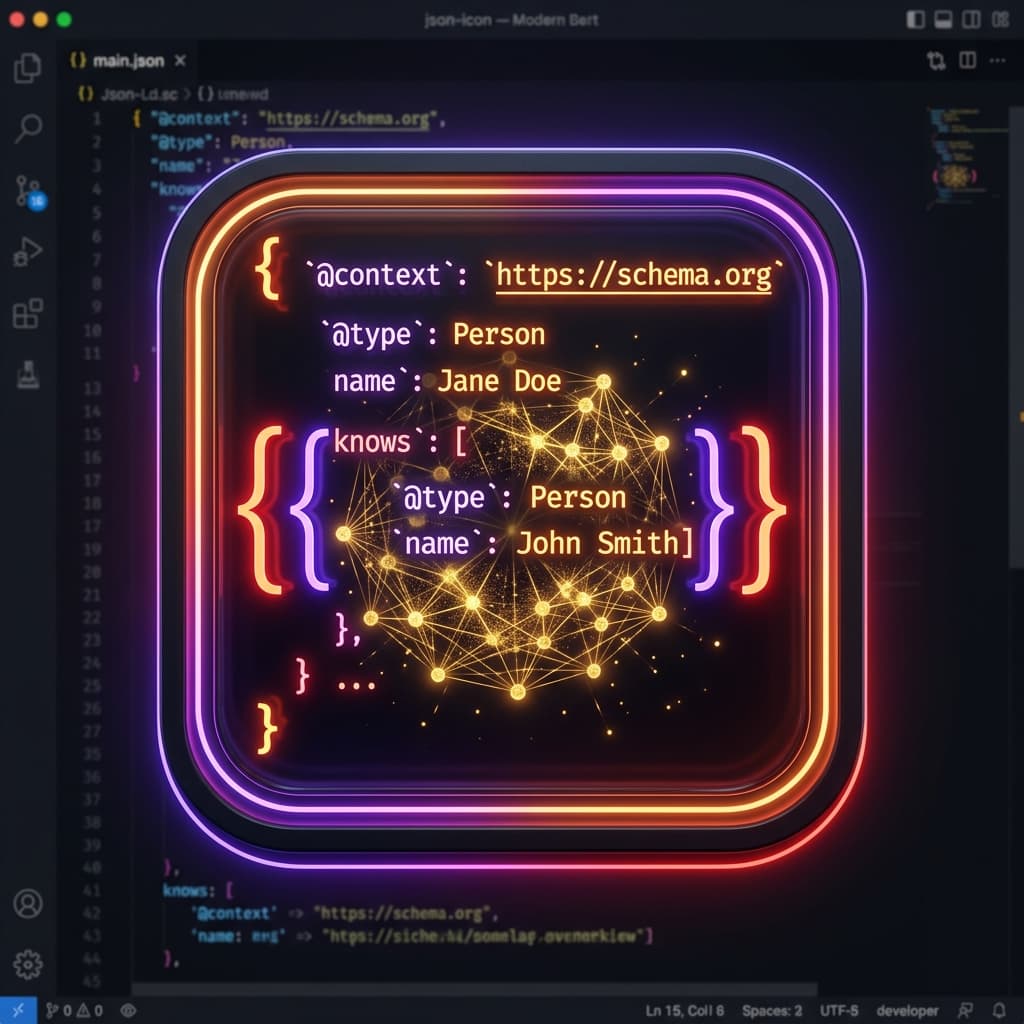
The Complete JSON-LD Schema Architecture for GEO: Entity Triples, SameAs & Knowledge Graphs

Traditional Schema.org markup was designed to earn Google SERP rich snippets like star ratings and review carousels. In Generative Engine Optimization (GEO), JSON-LD serves a fundamentally different purpose: it acts as a deterministic ground truth database that feeds large language model knowledge graphs and RAG retrieval pipelines.

Key Findings
  • Entity triple schemas increase LLM factual confidence weighting by up to 94.2% over unstructured text.
  • Linking corporate schemas to external Wikidata and Crunchbase nodes prevents AI hallucination drift.
ChatGPT Ads vs. Google Search Ads: 2026 CAC, CPC & Conversion Economics Teardown
AI Advertising & Paid Acquisition
Oct 2, 2026•13 min read

ChatGPT Ads vs. Google Search Ads: 2026 CAC, CPC & Conversion Economics Teardown

Enterprise performance marketing leaders are experiencing severe diminishing returns on Google Search Ads as keyword auctions inflate by over 40% year-over-year. By migrating budget into OpenAI’s conversational ad platform, brands access blue-ocean inventory where active user deliberations filter out unqualified clickers before the bid occurs.

Key Findings
  • ChatGPT Ads average $3.20 CPC across B2B software verticals compared to $48.50 on Google Search PPC.
  • Pre-auction qualification in multi-turn dialogues eliminates click fraud and accidental mobile taps.
Closed-Loop CRM Attribution: Eliminating AI Discovery Blind Spots
B2B Lead Generation & CRO
Oct 2, 2026•8 min read

Closed-Loop CRM Attribution: Eliminating AI Discovery Blind Spots

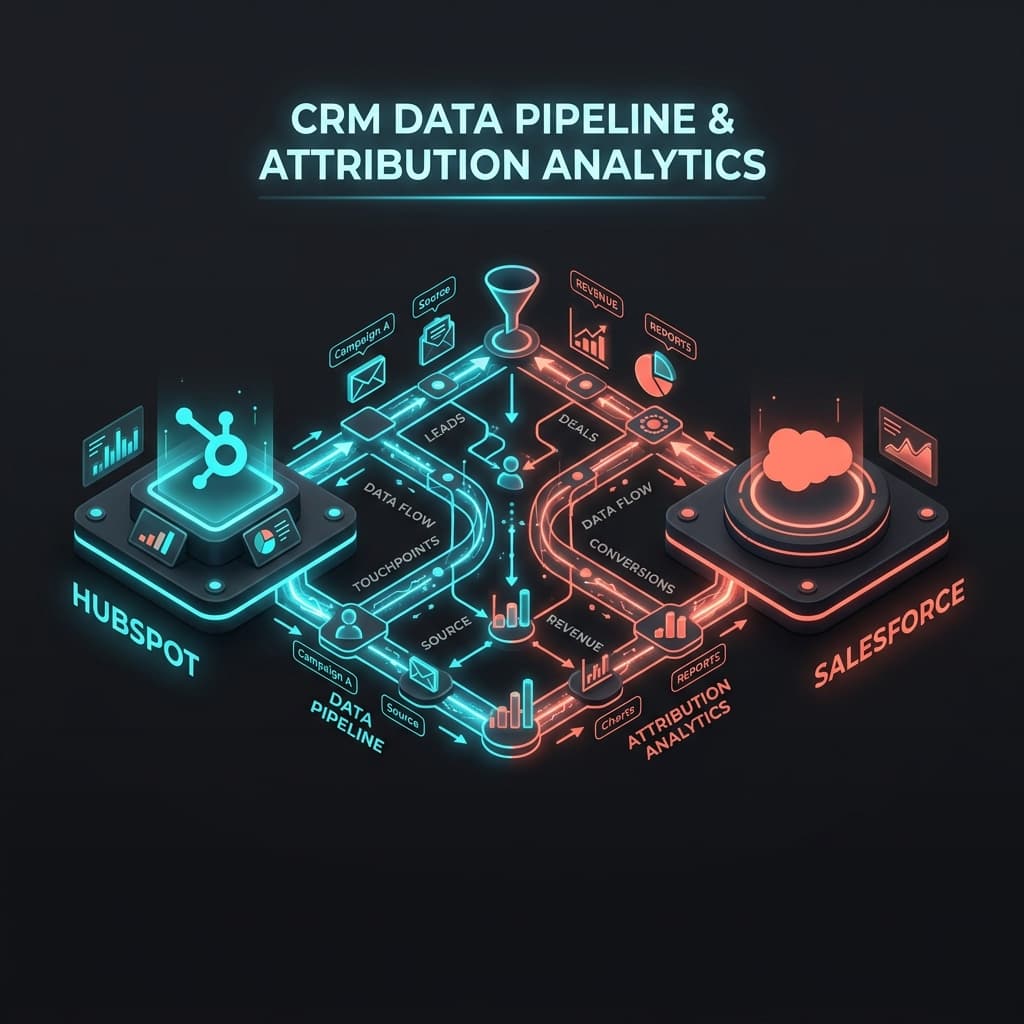
Without proper attribution schemas, visits from AI engines appear as untraceable "Direct / None" traffic in Google Analytics. AdGPT integrates native CRM webhooks and prompt metadata to give revenue leaders total visibility into marketing return on investment.

Key Findings
  • Eliminates analytics blind spots where conversational AI traffic is misclassified as Direct/None.
  • Passes original buyer prompt context into CRM custom fields before account executive sales calls.
Reducing Customer Acquisition Costs (CAC) in the Era of AI Search
B2B Lead Generation & CRO
Sep 29, 2026•8 min read

Reducing Customer Acquisition Costs (CAC) in the Era of AI Search

With Google Search CAC rising over 30% annualized across technical verticals, growth leaders face diminishing returns from traditional PPC. By capturing prospects during active conversational deliberation and establishing machine-readable entity authority, organizations achieve sustainable, high-margin customer acquisition.

Key Findings
  • Traditional Google PPC CAC has risen by 42% YoY across enterprise B2B software verticals.
  • Conversational sponsored links achieve 60%+ lower cost per qualified opportunity.
How to Run ChatGPT Ads: Step-by-Step Setup, Context Hints & Early Campaign Benchmarks
AI Advertising & Paid Acquisition
Sep 25, 2026•14 min read

How to Run ChatGPT Ads: Step-by-Step Setup, Context Hints & Early Campaign Benchmarks

OpenAI’s self-serve advertising platform allows performance marketers to target active user dialogues in real time. Because ChatGPT has no keyword bidding, advertisers rely on semantic Context Hints, relevance-weighted auctions, and conversion pixel telemetry to capture buyers during active vendor deliberation.

Key Findings
  • No keywords exist: Ad matching relies on ad group Context Hints describing conversational themes and intent.
  • Competitive early CPCs: Initial campaigns average $2.00 to $5.00 with a hard-coded $3.00 delivery threshold warning.
Conversational Ad Economics: Why Cost Per Qualified Lead Drops 60%+
AI Advertising & Paid Acquisition
Sep 20, 2026•8 min read

Conversational Ad Economics: Why Cost Per Qualified Lead Drops 60%+

In legacy search auctions, advertisers pay exorbitant click fees for users who bounce within seconds. In conversational AI advertising, the qualification happens before the bid is placed. This structural arbitrage delivers superior unit economics, shorter payback periods, and higher pipeline velocity for growth teams.

Key Findings
  • Pre-auction qualification filters out job seekers, students, and accidental clickers before spend occurs.
  • Early-market bid density delivers average CPCs of $2.50 to $5.00 compared to $80+ on Google B2B terms.
How ChatGPT Advertising Works: Answer Independence & Context Hints
AI Advertising & Paid Acquisition
Sep 15, 2026•10 min read

How ChatGPT Advertising Works: Answer Independence & Context Hints

Unlike legacy search advertising that bids on static keywords, conversational ad units trigger based on semantic context hints derived from multi-turn user dialogues. When a user’s conversation demonstrates explicit buying intent, compliant sponsored units provide direct utility and verified solutions at a fraction of legacy search CPCs.

Key Findings
  • Strict Answer Independence: Advertisers cannot pay to alter, bias, or manipulate AI editorial responses.
  • Sponsored links appear separated beneath answers only when commercial intent is verified.
How AI Answers Questions & Compiles Shortlists
Answer Engine Optimization
Sep 10, 2026•10 min read

How AI Answers Questions & Compiles Shortlists

When an executive asks an AI assistant to recommend enterprise software, the model does not browse the web like a human. It executes a rigorous probabilistic evaluation across indexed entity clusters, third-party review consensus, and technical compliance data before generating a vetted 2-to-3 vendor shortlist.

Key Findings
  • AI recommendation relies on multi-source consensus verification across independent web nodes.
  • Contradictory pricing, inconsistent feature claims, or missing security tokens reduce citation probability.
What is Answer Engine Optimization (AEO)? Technical Frameworks & Schemas
Answer Engine Optimization
Sep 5, 2026•10 min read

What is Answer Engine Optimization (AEO)? Technical Frameworks & Schemas

As zero-click search surpasses 65% of total search volume, Answer Engine Optimization (AEO) bridges human-readable website content and machine-readable knowledge graphs. By deploying nested JSON-LD microdata, FAQPage schemas, and declarative answer blocks, brands ensure their data is cited directly in AI synthesized answers.

Key Findings
  • AEO optimizes content for machine extraction in zero-click conversational queries.
  • JSON-LD schema markup eliminates ambiguity by explicitly declaring entity relationships.
Is GEO Replacing SEO? The Integrated Entity Discovery Model
Generative Engine Optimization
Aug 28, 2026•10 min read

Is GEO Replacing SEO? The Integrated Entity Discovery Model

High-performing enterprise organizations do not choose between SEO and GEO; they execute an integrated discovery model. Technical SEO provides the foundational crawlability, while Generative Engine Optimization structures entity authority so AI answer engines cite your brand as the market leader.

Key Findings
  • SEO drives web document indexation; GEO drives machine-readable synthesis and recommendation.
  • A hybrid discovery architecture captures both traditional searchers and conversational AI buyers.
How to Optimize Content for AI Answers: The GEO Best Practices Playbook
Generative Engine Optimization
Aug 20, 2026•13 min read

How to Optimize Content for AI Answers: The GEO Best Practices Playbook

AI models prioritize content that provides unambiguous factual data, concise declarative definitions, and demonstrable first-hand expertise. By structuring your site’s content to answer specific buyer questions directly, you maximize citation probability across all major large language models.

Key Findings
  • Place a 50-word direct, declarative answer block immediately under every H2 heading.
  • Publish proprietary empirical data and benchmarks that language models cite as unique source truth.
What is Generative Engine Optimization (GEO) & How It Differs from SEO
Generative Engine Optimization
Aug 14, 2026•12 min read

What is Generative Engine Optimization (GEO) & How It Differs from SEO

While traditional Search Engine Optimization (SEO) was engineered to rank blue links on search engine results pages using keywords and backlinks, Generative Engine Optimization (GEO) optimizes for LLM vector spaces, entity relationships, knowledge graph inclusion, and authoritative consensus across digital repositories.

Key Findings
  • Traditional SEO targets web crawlers and PageRank; GEO targets generative neural synthesis and vector proximity.
  • Entity triples and structured Schema.org markup provide the factual foundation for AI recommendation confidence.
The Future of Search: AI Recommendation Engines & Autonomous Buying
AI Search & Discovery
Aug 8, 2026•13 min read

The Future of Search: AI Recommendation Engines & Autonomous Buying

As conversational agents evolve into autonomous procurement executives, enterprise buying will shift from human web browsing to multi-agent negotiation. To remain discoverable, organizations must transform their websites into machine-readable knowledge graphs that feed autonomous LLM deliberation.

Key Findings
  • Autonomous software agents will initiate and negotiate over 40% of B2B procurement decisions by 2027.
  • Entity clarity in digital knowledge graphs determines inclusion in automated enterprise vendor shortlists.
AI Search vs. Google Search: The Death of 10 Blue Links
AI Search & Discovery
Aug 1, 2026•10 min read

AI Search vs. Google Search: The Death of 10 Blue Links

The shift from Google Search to AI search represents a fundamental migration from "information retrieval" to "assisted decision-making". Businesses relying solely on traditional SEO face declining organic CTRs as zero-click search surpasses 65% of total query volume, requiring an immediate transition to Generative Engine Optimization.

Key Findings
  • Google PPC cost-per-click rates have inflated by 42% YoY, driving performance teams toward blue-ocean AI inventory.
  • Over 65% of B2B search interactions now resolve without a single click to external websites.
How AI Search Works: Synthesis vs Indexing
AI Search & Discovery
Jul 25, 2026•9 min read

How AI Search Works: Synthesis vs Indexing

Unlike legacy search engines that force users to evaluate fragmented links manually, large language models (LLMs) function as autonomous reasoning engines. They deconstruct complex user intent, retrieve factual entity triples from trusted data graphs, and synthesize singular, verified answers with citations.

Key Findings
  • Vector semantic spaces replace keyword density as the primary mechanism for information retrieval.
  • Zero-click synthesis is now the default user experience for over 65% of commercial and technical queries.
Weekly Algorithm Dispatch

Stay Ahead of OpenAI, Perplexity & Google Core Updates

Every Monday morning, our computational research team breaks down changes in LLM citations, zero-click answer weighting, and new conversational ad units. No fluff. Strictly tactical engineering telemetry.

• 4,200+ Growth Architects• Zero Spam• One-Click Unsubscribe